
Fixing a tank heater
Some tank problems are repaired in place: a worn valve, a leaking connection, an element or burner that has stopped working.
A dripping relief valve pipe, an upstairs shower that never gets hot enough or a tank leaking at its base each point back to the water heater. We repair, replace and install tank and tankless heaters.
White Plains has its own rules for hot water, covered below, and its Department of Building enforces them.
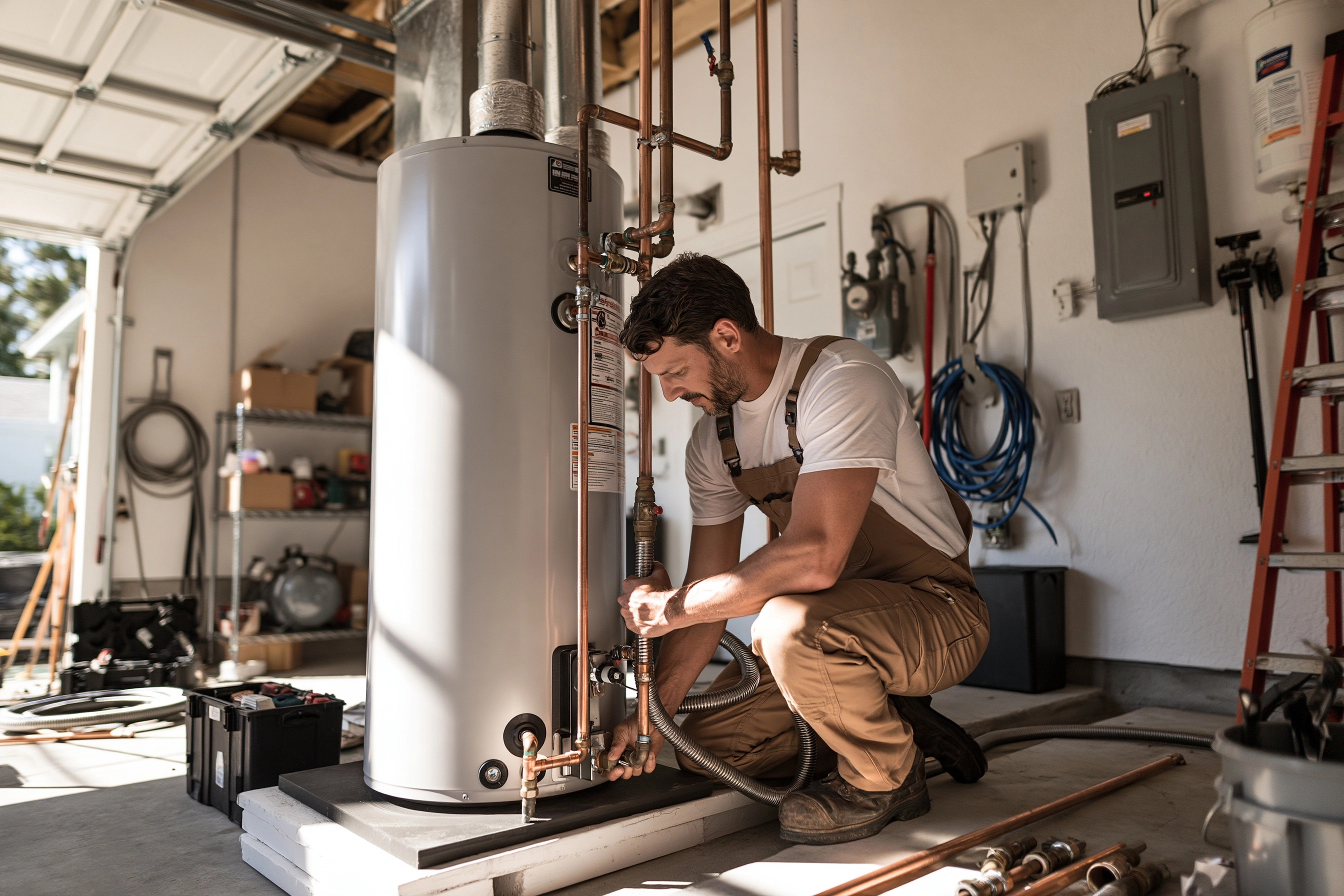
Some tank problems are repaired in place: a worn valve, a leaking connection, an element or burner that has stopped working.
When a tank has failed or is leaking at the base, replacement is the answer. The new tank is sized to the household and connected to the existing supply and venting.
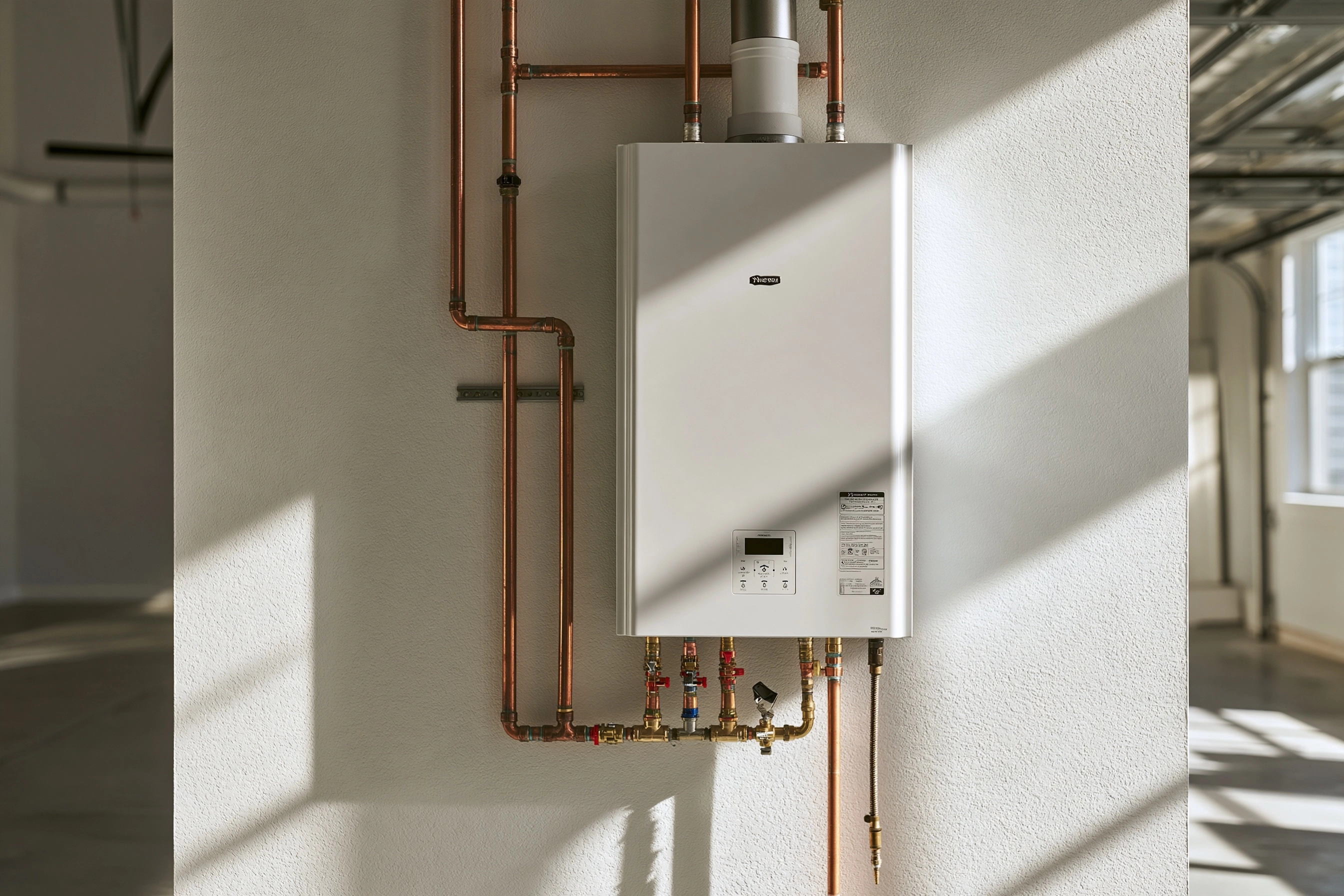
Tankless units heat water on demand rather than keeping a tank full. Gas and electric versions can heat different amounts of water at the same moment, and the tankless flow calculator compares them.
Moving a heater to another room or adding a second one means new supply lines and, for gas models, new venting. The new location also has to follow the hot water rules below.
Water heating facilities have to supply water at no less than 110°F at every required fixture. The department enforces this under the Property Maintenance Code of New York State.
A fuel-burning heater may not sit in a bathroom, a bedroom or a closed occupied room without combustion air. A temperature and pressure relief valve and its discharge pipe also have to be installed and maintained.
On the Department of Building’s short-form application, hot water heaters have their own column in the plumbing work list. Plumbing applications may only be submitted by a licensed Westchester County Master Plumber, and either that plumber or a certified journeyman has to be at every plumbing inspection.
Two numbers go into the water heater size calculator, the people in your household and the hot-water uses in the busiest hour, and a tank size comes back. For the tankless flow calculator, White Plains’ January low of about 25°F sets the incoming water temperature.
The serial number decoder wants two entries, the brand and the serial number, taken from the data plate on the heater. It answers with the year the heater was built and how old it is.
See leak detection or repiping for supply pipes, or the homepage.
Call us to discuss your current issue and how we can assist you. The call is free and you get a free, personalized estimate with no obligation. We're here to help.
Call (855) 321-3426